-
 Annual directory of the inhabitants, institutions, incorporated companies, manufacturing establishments, businesses, business firms, etc. in the City of Sheboygan. Published by Richard Edwards and company.
 -
 By Bernard Michaels A story of the settlement of the northern Kettle Moraine in Sheboygan County, Wisconsin focusing on the town of Mitchell.
 -
 By Bill Wangemann Sheboygan deserves its reputation as a conservative city, quiet and law abiding. But here are some stories from the past that have been swept under the rug or lost overboard. Venture into the mists of the Lake Michigan Triangle that have swallowed boats, planes and entire tribes. Investigate speakeasy shootings, safes burgled by a flyswatter, poisoned Christmas candy and the hoax that had militiamen firing on their own cattle. Or just sit down with some bizarre anecdotes about a hometown you though you knew, from the town’s first baseball game to the man freed from jail by a jug of whiskey to the deputy sheriff who had to enforce Nicholas Hoffman’s first bath in fifty years.
 -
Sale!
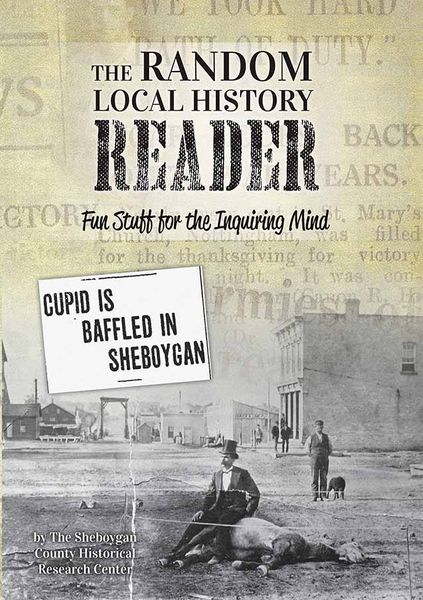 The Random Local History Reader is filled with odd and interesting history. What is the real story of the Dead Horse? Who was the Black Terror of Sheboygan? Have you ever read an obituary for an outhouse? Learn the meaning of the term, Yeggman. Find out why Cupid was baffled. And read the full story behind the murder of revered, early teacher, John Sexton. Great reading for quiet time, you’ll enjoy every story and photo included in this random collection of historical gems.
 -
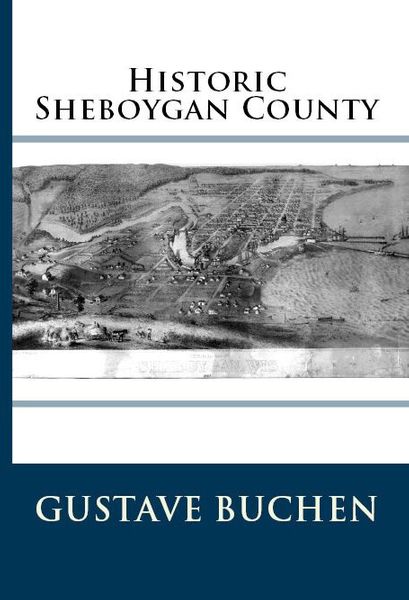
By Gustave Buchen
Considered the quintessential book on Sheboygan County history, this volume by Gustave Buchen, was written in 1944, when many of the original settlers were still alive. The information is well documented and tells the story of Sheboygan County's first years. The book includes an index, maps of early Sheboygan County and drawings. 2015 Reprint.
-

by Peter Fetterer
The railroads of Sheboygan County have left behind a legacy of stories … some tragic, some humorous, and some almost unbelievable. The stories bear testimony to the men and women who worked on the early rail lines that served the county … the engineers, firemen, brakemen and conductors who ran the trains … the shop men and track gangs who kept them running … the station agents, freight handlers and railroad officials supporting the operations, and the passengers and hobos who rode the rails.
The railroaders working these lines for nearly 150 years and the passengers riding their trains have been an integral part of our history. These are some of their stories … tales from the rails of Sheboygan County.
-
Sale!
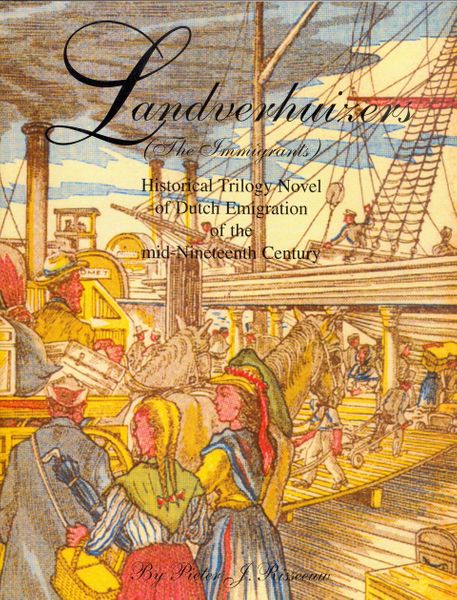
By Pieter J. Risseeuw
A historical novel, originally published as a trilogy, of Dutch immigration of the mid-nineteenth century. This English translation is made available for the first time by permission of the original publisher and supported by Netherland-America Foundation of New York. Originally published in Dutch in 1947, the novel discusses the trials and tribulations of immigration and the establishment of the Dutch churches and colonies in Iowa and Michigan.
-
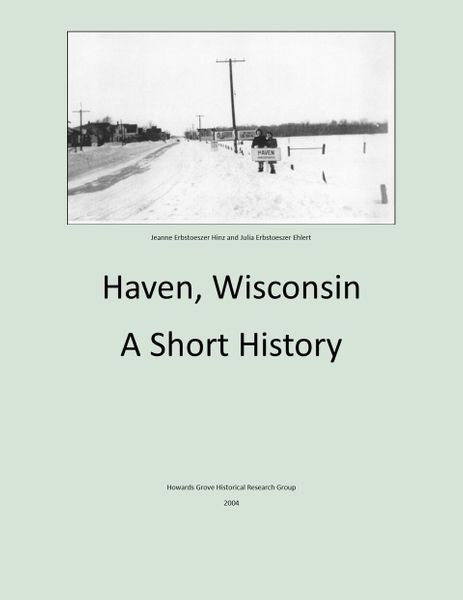 By the Howards Grove Area Historical Research Committee The settlement of Haven, located in the Town of Mosel on the western shore of Lake Michigan, Sheboygan County, was formerly known as Seven Mile Creek, not Seven Creeks, as has been recorded in a newspaper account of the area’s history. It got its name from a small creek which flowed into Lake Michigan about seven miles north of Sheboygan. The first post office in Haven was established on July 16, 1897. The first postmaster in Haven was Frederick W. Franzmeier. In 1897 Frederick and Herman Franzmeier built a rooming house, tavern and store next to the railroad tracks. In 1903 the post office was established in that building.
 -
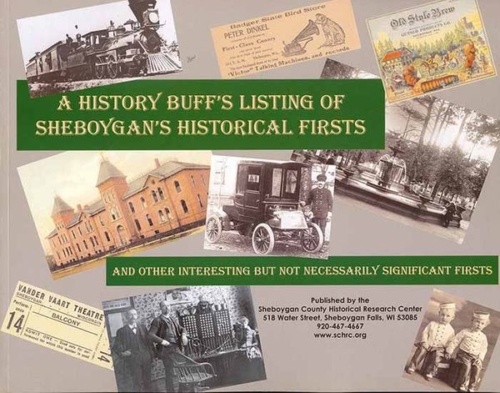 By Robert Spatt. The City of Sheboygan has many interesting and important "Firsts". This book documents many of those items. There is bound to be a chapter for every interest and although residents of Sheboygan will know many of these firsts, there are a lot of surprises. Some of the firsts are obscure such as the first bratwurst stand, the first department store, the first female principal of a school, the first baby born in Sheboygan; Others, such as the city founder, Farnsworth, and many of the sporting events, maybe remembered by many. The final chapter is entitled “Et Cetera.” Here are little known firsts that don’t fit into any category – Peter Dinkel and his canaries, Clemens Reiss the first to cross the city’s new Eighth Street Bridge in 1923, the street sprinkler who sprayed water on the dusty dirt streets and other obscure first facts. A book to pick up and read a chapter at a time then casually sprinkle conversations with a “did you know that….”
 -
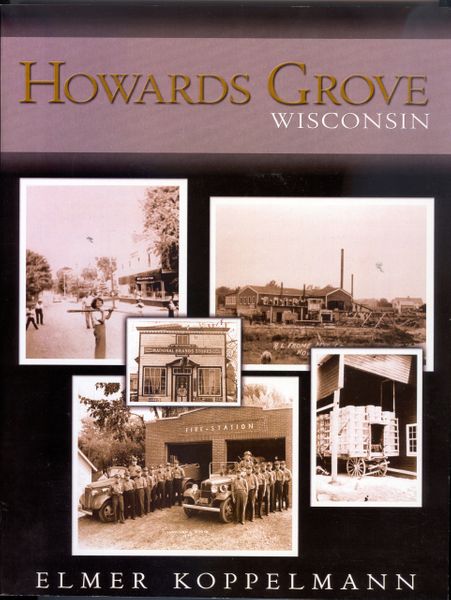 By Elmer Koppelmann The village of Howards Grove began as two separate villages, Howards Grove and Millersville. Not until 1967 did the two unite into one incorporated village. The first European settlers to settle in the town of Herman (originally named Howard) were the "Lippers"- a group of 13 families and seven orphaned young people from Lippe-Detmold, Germany. The year was 1846, and the group's leader was Friedrich Reineking. They settled on the land that is now Lakeland College. This volume brings the history of the area back to life, and documents the families and businesses that, today, make up Howards Grove.
 -
By Denny Moyer
This short book outlines the 100 year history of Baseball in Sheboygan, Wisconsin. Sheboygan's colorful history began with the Elwell Boys sponsored by Elwell Flour Mill and chronicles the many teams up to the present Sheboygan A's.
-
Sale!
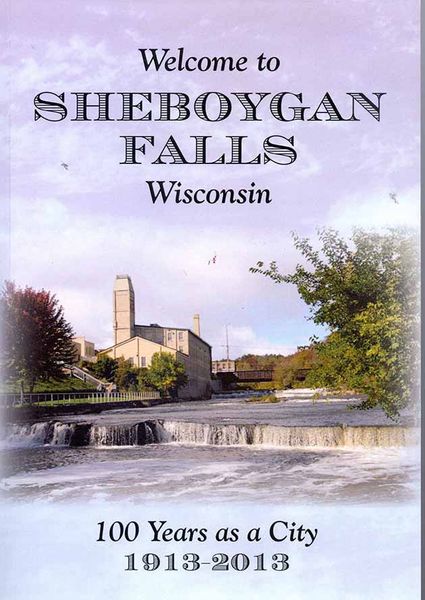 This is a reprint and update of the 1976 book done for the Bicentennial. This book was done in conjunction with the 100th anniversary of Falls becoming a city. Trace the evolution of the business district and learn about the wide variety of civic groups which once kept citizens busy. See how the fire department has grown and take a peek at the folks who settled Falls
 -
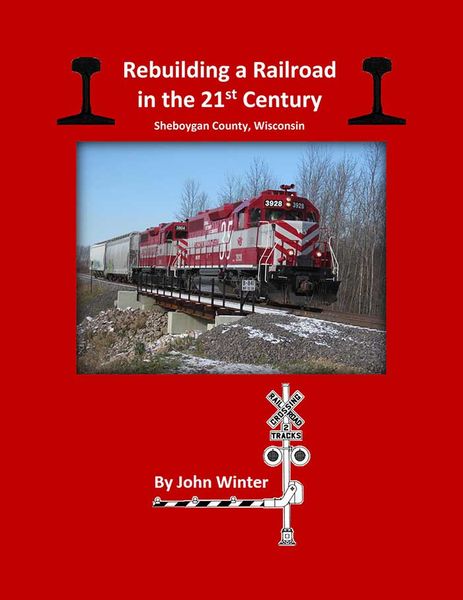 Rebuilding a Railroad in the 21st Century: Sheboygan County, Wisconsin, documents the rebuilding of an 11-mile rail line in Sheboygan County, after being dormant for nearly 30 years. This was more than just a fix-it-up job, but the replacement of the entire line from the ground up with new track built to modern standards to handle heavy loads. It also required one trestle to be completely replaced and others reinforced. Adding to the generous amount of photos, there are “before” and “after” photos taken at dozens of locations, and it won’t seem possible that these photos were taken at the same location. Also included is the history of this line from the pre-civil war era to current times. Old rail dating back over 150 years was found and included is the story that these old rails tell.
 -
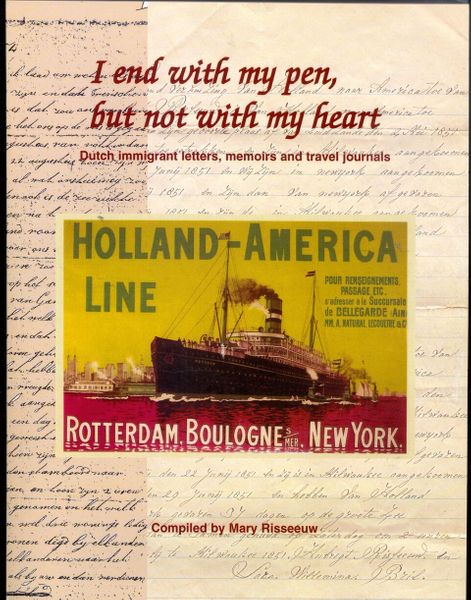
By Mary Risseeuw
These letters, memoirs and travel journals span a hundred year period (1847-1959) and offer a fascinating view into the lives of the immigrants and their families. Some provide remarkable detail about their journey to America and their struggles to establish a new life. Others offer little beyond the basics: weather, health, crops, births and deaths. Most are grateful for the blessings of God and the fact that they are still ‘fresh and healthy’ (alive and well, in more modern terms!). The criterion for selecting the contents of this book was to present an overview of different settlements in Wisconsin and to provide a glimpse into the differences and similarities between the various immigration waves. There are vivid tales of crossing the Atlantic Ocean and personal glimpses into the Civil War, World War I and World War
-
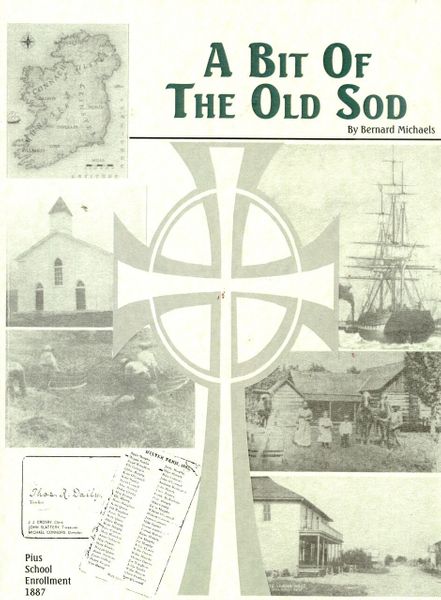
By Bernard Michaels
The poignant story of immigration and settlement of the Irish in Sheboygan County, this book gives an account of the Byron-Lima Settlement, a span of some thirty miles in which over 600 Irish families settled. The community's irregular borders ran from Kennedy's Corners in Lima to the frame church of Byron's St. John. The town of Mitchell, Sheboygan County is at the heart of this story.
-
Sale!
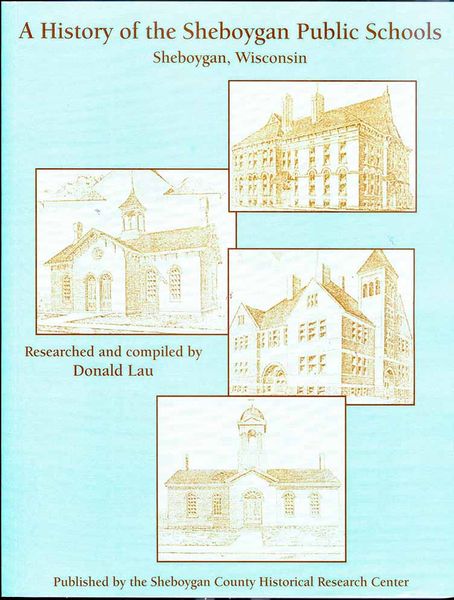 By Don Lau This book documents the growth of education in the City of Sheboygan. Did you know that Sheboygan had a Day School for the Deaf, A Fresh Air School- Tuberculosis- as part of the Third Ward School and was the first home of Lakeshore Technical College? Dozens of photos.
 -
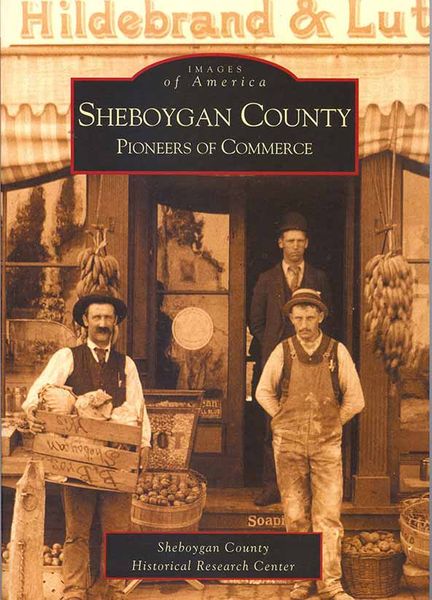 Sheboygan County's iron-fisted work ethic began with its earliest residents. From the jackknife trading posts and mill wrights of the early 1800s to the spas and "Great Wall of China" of Kohler Company, the importance of commerce to Sheboygan County is evident. This wonderful pictorial history of the small family-owned business of Sheboygan County begins in the 1870s and ends with a great image of a 1950s American Classic-McDonald's Golden Arches.
 -
Sale!
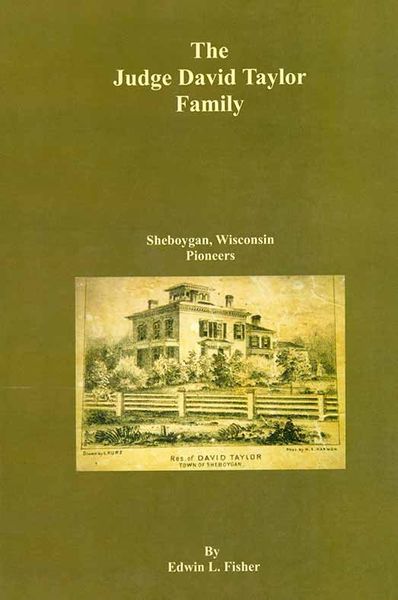 By Edwin L. Fisher Because of the prominence and close connection by virtue of the Sheboygan County Historical Society occupation of his 1852 mansion, it was thought more should be known about Judge David Taylor and his family. As a Wisconsin State Supreme Court Justice, he was one of the most important early settlers in Sheboygan, Wisconsin. As research proceeded so much interesting family-related information became available that the story expanded.
 -
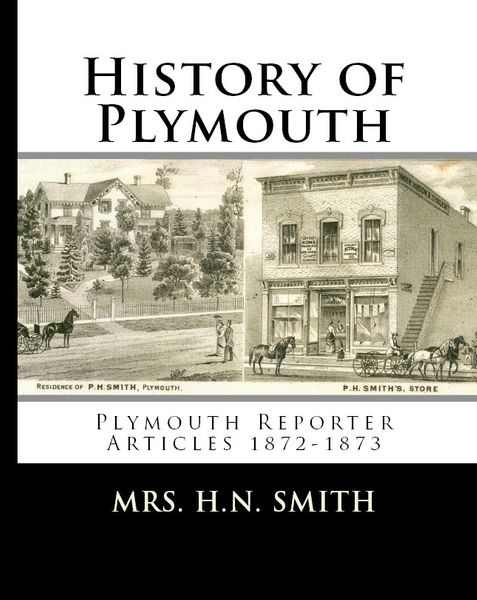 By Laura Chase Smith This history of the township of Plymouth, the Villages of Plymouth and Quitquioc, Sheboygan County, Wisconsin was written by Mrs. H.N. Smith. This series of articles was published in the Plymouth Reporter between December 10th, 1872 and June 5th, 1873. It details the lives of Plymouth’s earliest citizens.
 -
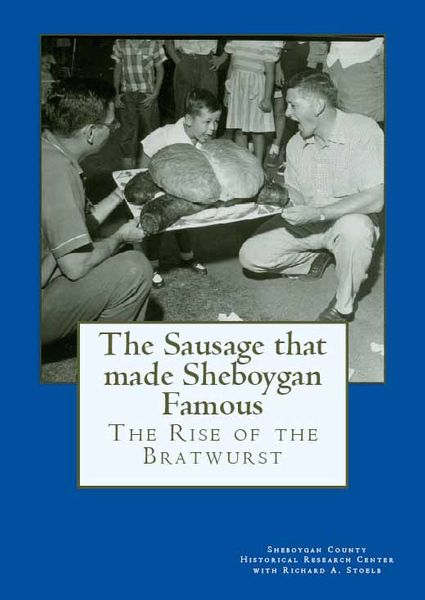 Since 1953, August brings Bratwurst Day, a celebration of sausage and of our collective German heritage. The brat is a social food in Wisconsin where Germans first introduced it to the New World. We have brat fries on weekends like folks have BBQs in the south and Chicago has its deep dish pizza. It is part of a deep food tradition. Few things identify one’s German heritage more than making sausage. Sausage was a means of survival for our German ancestors during the winter months, as well as a way to use precious meat scraps and pay homage to their porcine good luck charm. This book documents the long and varied history of some of Sheboygan's nearly forty meat markets and sausage producers. We’ll revisit sausage-making in the county and remember the heyday of 1950s Bratwurst Days.
 -
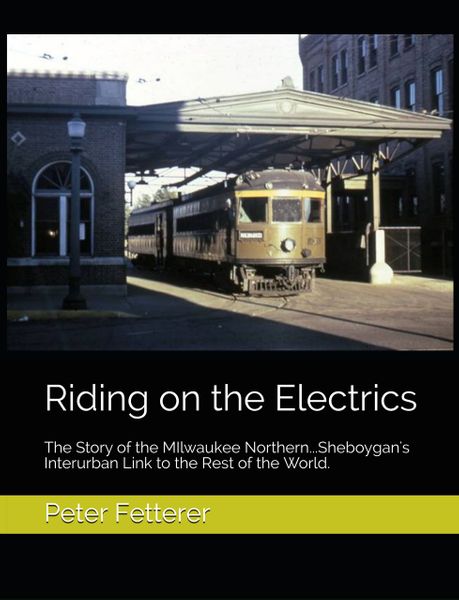 The story of the Milwaukee Northern . . . Sheboygan's interurban link to the rest of the world by Peter Fetterer. Available by about November 30, 2018.