-
Sale!
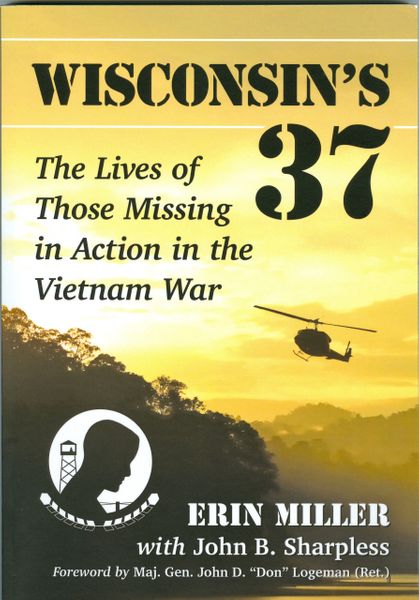 Wisconsin's 37, The Lives of Those Missing in Action in the Vietnam War. By Erin Miller with John B. Sharpless Foreword by Major General John D. "Don" Logeman (Ret.) The signing of the Paris Peace Accords in 1973 signified the end of the Vietnam War. American personnel returned home and the 591 Americans held captive in North Vietnam were released. Still, 2,646 individuals did not come home. Thirty-seven of those missing in action were from Wisconsin. Using the recollections of the soldiers' families, friends and fellow servicemen, the author tells the story of each man's life.
 -
Sale!
 On a cold, cloudy evening, February 20, 1919, Zion Reformed Church in Sheboygan was reportedly "packed to the doors" to hear a concert. The highlight was to be a cantata performed by the Zion Choir, but the program listed them as "assisted" by a new entity: the Sheboygan Community Orchestra, led by John Schmidt, "who certainly needs no introduction," according to the anonymous review published the next day in the Sheboygan Press. In the months to follow, that body of players would be performing on their own, and by the time of their third concert they would be calling themselves the Sheboygan Symphony Orchestra. They are still the SSO, one hundred years after their founding in the fall of 1918: the oldest symphony orchestra still functioning in the state of Wisconsin. They have performed continuously, except for pauses during the Great Depression and in the midst of World War II; and though they were called the Sheboygan Civic (Symphony) Orchestra from 1936 to 1973, there has been a continuity in both personnel and musical vision, linking one generation to the next over a 100-year span.
 -
Sale!
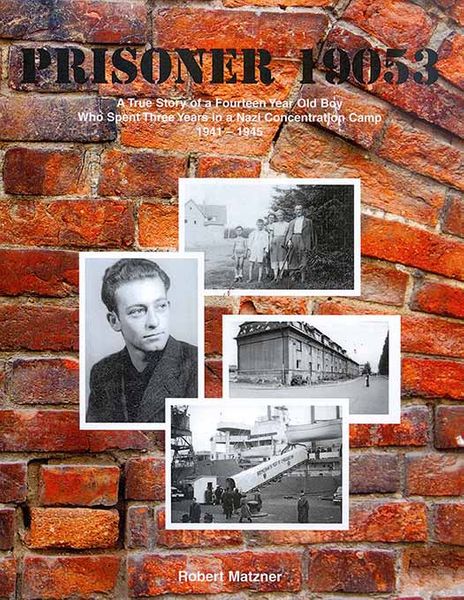 By Robert Matzner Sheboygan resident, Robert Matzner, had a very important story to tell. Friend, Larry Vogel, helped him to put pen to paper. The result is Prisoner 19053, the true story of Matzner’s three years in Nazi concentration camps. Matzner, a native of Poland, lost most of his family to the Nazi’s Final Solution. He somehow survived the horror and came to the United States and Sheboygan with his family in 1949. Robert and Larry have written a remarkable document, a story full of sadness and hope which will touch all readers. The introduction, written by Robert’s son, Murray, is a poignant tribute and a great beginning to Prisoner 19053.
 -
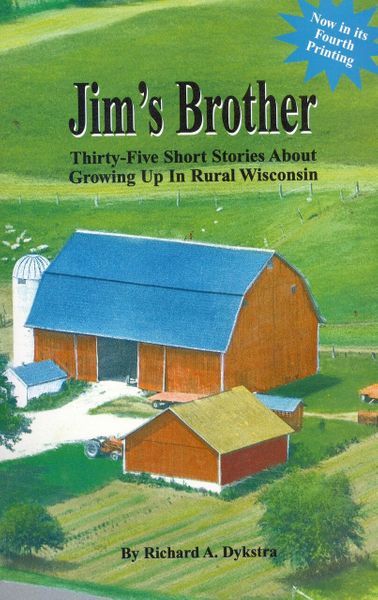 By Richard A. Dykstra Thirty-five heartwarming stories about growing up in rural Wisconsin during the 1950s and 1960s.
 -
Sale!
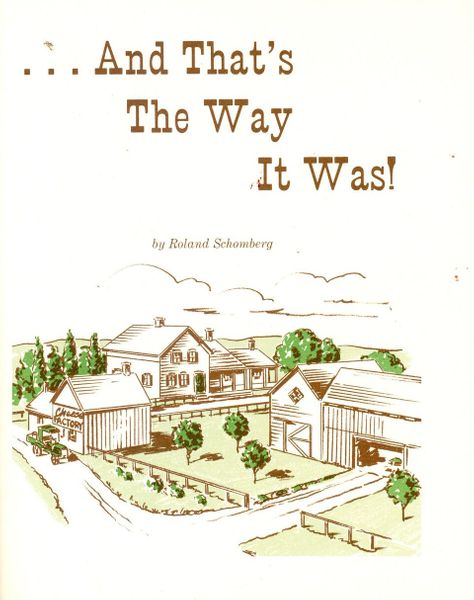 By Roland Schomberg The stories for "...And That's the Way it Was" were inspired by Schomberg’s parents' life on their Sheboygan County family farm. Though not a literary masterpiece, the hand-written two-page chronicle of events, sprinkled with bits of his own philosophy, provided most revealing and interesting reading for the author. Reflecting on his part in the family history, he resolved to leave a similar legacy for his children and their offspring, so that they might be enlightened and amused by my narratives of life during Schomberg’s boyhood in Wisconsin.
 -
 Originally platted as the village of Rochester, Sheboygan Falls took shape in the late 1830s and 1840s. Settled by Yankee entrepreneurs from the East, "Sheboygan at the Falls" was a strong settlement from the beginning, surviving even the financial panic of 1837. A city of Greek Revival and Cream City brick architecture, Sheboygan Falls boasts two districts listed on the National Historic Register
 -
Sale!
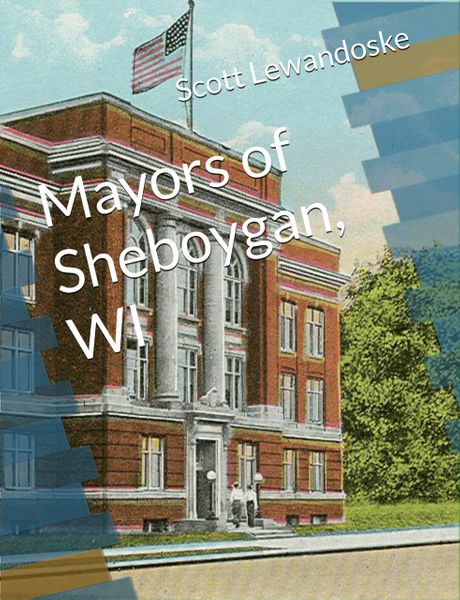 Since 1961, Mayors of Sheboygan have been elected to four-year terms and considered full-time mayors. Prior to 1961, Mayors were considered part-time mayors because the men had other jobs, while also serving as mayor. Starting in 1853, the men who ran for mayor were nominated by local political parties which many times made things interesting. There were times when the man nominated for mayor did not want the job. In the 165 year history of Sheboygan, little has been done to honor the men who served as mayor. This book is an effort to pay tribute to them and accurately, yet simply, document their political tenure. The vignettes that follow are in alphabetical order for ease of organization. Filled with photos this includes biographies of all of the city of Sheboygan’s part-time and full-time mayors.
 -
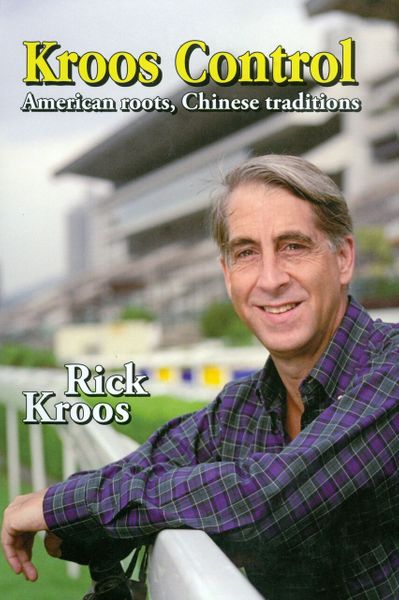 By Rick Kroos This autobiography by Rick Kroos takes you from his childhood home in the city of Sheboygan to Vietnam to Hong Kong, where he has lived most of his adult life. It is a wonderful and inspirational story from beginning to end.
 -
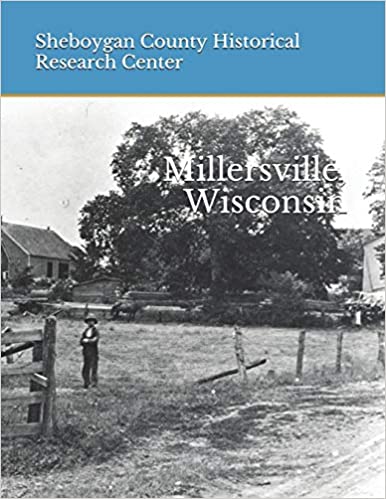
By Millersville Historical Research Group
The history of the area dates back to 1846 when the first immigrants found their way along the Pigeon River and settled in the area. At first the two settlements were known as Howards and Mueller Villa, later becoming Howards Grove and Millersville.
But in 1967, the two communities incorporated as Howards Grove-Millersville, becoming Sheboygan County’s 10th village, the fourth largest. It also brought the village fame with its cumbersome 24-letter title, the longest in the state. Eventually, the city dropped Millersville and took Howards Grove as its proper name. This book follows the history of just the Millersville portion of the area.
-
 Sheboygan County Connection III is the continuing record of the lives of Sheboygan County residents and their adventures in history. Read about dozens of historic happenings experienced by residents from the death and autopsy of victims of Ed Gein to the mysteries of Sheboygan's Rancho de las Flores, refugees of the Great Chicago Fire of 1871, the architect for the construction of the first Mormon Temple at Nauvoo, Illinois and history of outhouses. These stories ran in the Sheboygan Press from November 2015 to October 2016.
 -
Sale!
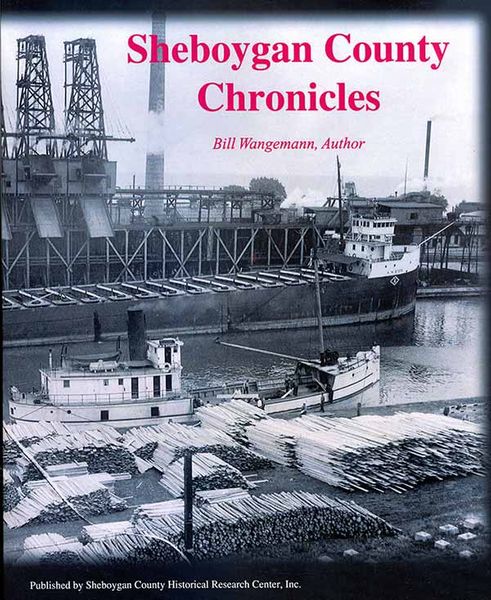
By Bill Wangemann.
This is a collection of Sheboygan City Historian, Bill Wangemann’s 2005 and 2006 Sheboygan Press articles. Topics include Memories of Railroads, Electric Rail or the Interurbans, maritime stories- The Burning of the Niagara and The Mysterious Loss of the Pere Marquette 18, movies, TV and drive-in theater, Garton Toy and its fire, the stumpff fiddle and so much more.
-
Sale!
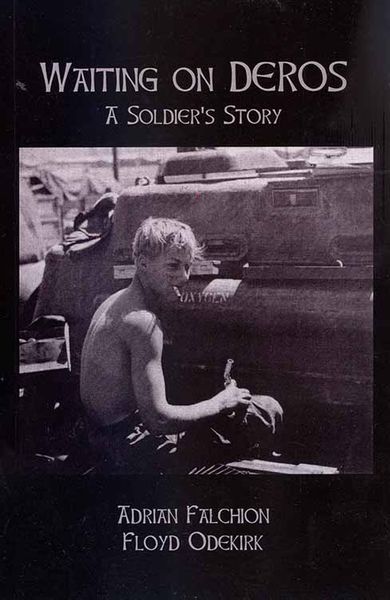 By Floyd Odekirk and Adrian Falchion Waiting on DEROS: A Soldier’s Story could not have been accomplished without the efforts of a Veteran, a writer and the spirit of every soldier walking within the pages of this book. Floyd Odekirk pursued the emotional task of bringing back the images of his tour in Vietnam (1968-69) so that the writer, Adrian Falchion, could paint in all its vibrant and dark colors the truths of war. Following the completion of 19 stories, Floyd Odekirk offered the light to his Veteran Brothers Michael Bennett, David Higgins, Craig Johnson, Dale Moravec, Donald Burch, Patrick Callahan, Joseph DeAugustine, Robert Moneypenny, Daniel Michael Pruitt and Thomas Vojvodich who each shared a story for the sake of honoring other soldiers.
 -
Sale!
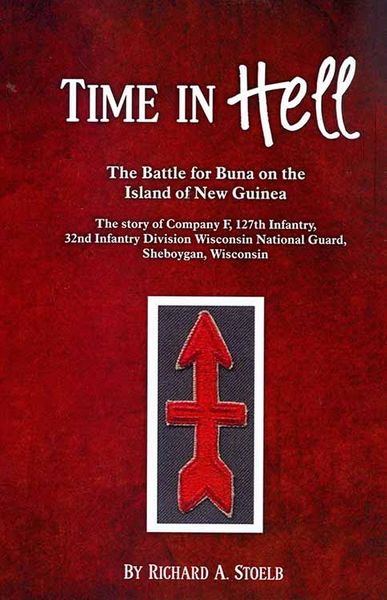 By Richard A. Stoelb This is the story of the men of Company F, 127th Infantry, 32nd Division, Wisconsin National Guard who left Sheboygan, Wisconsin for Federal Service on October 15, 1940. They would fight in the Battle for Buna on the island of New Guinea against the Japanese in World War II. Richard’s father, Roland Stoelb, was one of those soldiers who fought in the jungles of the Pacific to stop the Japanese during World War II. Roland along with dozens of boys from Sheboygan spent their Time in Hell, many of them making the ultimate sacrifice. Richard’s story personalizes the fight in the Pacific and honors the boys from Sheboygan.
 -
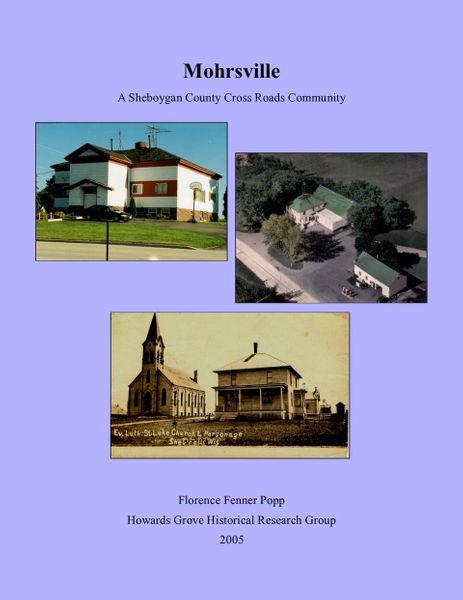 By Florence Fenner Popp Mohrsville was a small settlement located at the intersection of the Green Bay and Howards Roads in the town of Herman approximately 2 miles north of Sheboygan Falls. In the early 1900s Highway 32 was known as the Green Bay Road, and later for some time, it was Highway 42. Until World War II, County O was known as the Howards Road. Mohrsville consisted of: Starlight School, Mohnsam’s, the old cheese factory where Carol and Manny Zunker lived and Zunker’s garage. It was named for Paul Mohr who formerly owned a tavern there
 -
Sale!
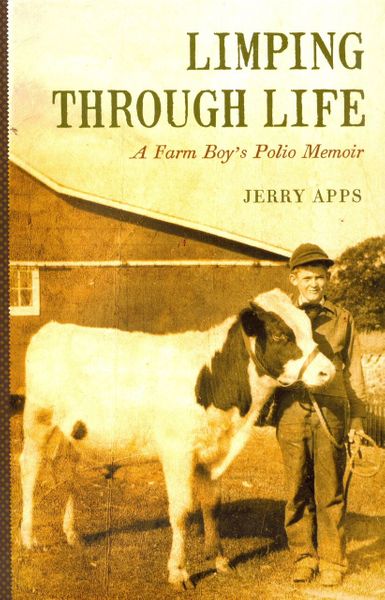 By Jerry Apps Polio was epidemic in the United States in 1916. By the 1930s, quarantines and school closings were becoming common, as isolation was one of the only ways to fight the disease. The Salk vaccine was not available until 1955; in that year, Wisconsin's Fox River valley had more polio cases per capita than anywhere in the United States. In his most personal book, Jerry Apps, who contracted polio at age 12, reveals how the disease affected him physically and emotionally, profoundly influencing his education, military service, and family life and setting him on the path to becoming a professional writer.
 -
Sale!
 By Betsy Jones Michael This charming memoir by a Sheboygan author tells about a middle-aged wife, mother/stepmother who, in 1970, trains herself to ride a brand new ten-speed Schwinn Super Sports bicycle. She qualifies for bicycle tours in foreign lands, and finds her own home roads of Wisconsin best of all. Her adventures require physical stamina, discipline and independence and strangely, lead her to uncover mysteries of her mother’s early life, as well as those of her ancestors. She also rediscovers herself. The Green Steed was chosen by Sheboygan’s Mead Public Library for their summer 2009 citywide Sheboygan Reads, co-sponsored by the Sheboygan Press.
 -
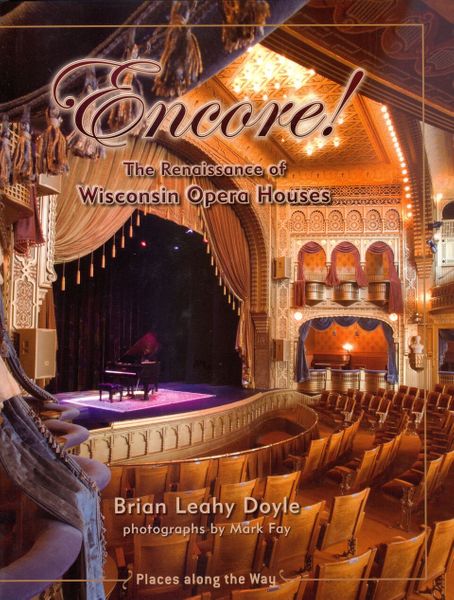 By Brian Leahy Doyle In Encore! The Renaissance of Wisconsin Opera Houses chronicles the histories of ten Wisconsin opera houses and theaters, from their construction to their heydays as live performance spaces and through the periods when many of these stages went dark. But what makes these stories so compelling is that all but one of the featured theaters has been restored to its original splendor.
 -
Sale!
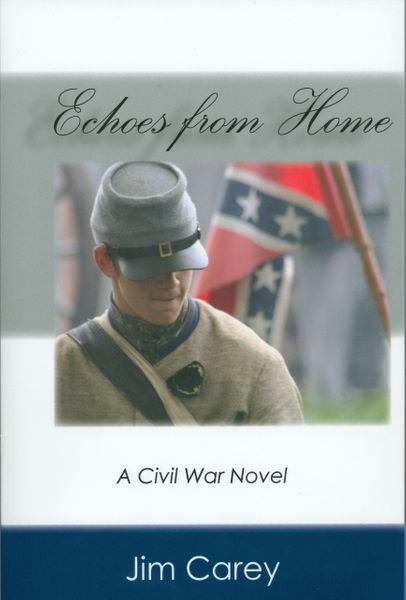 By Jim Carey Echoes from Home is a Civil War novel by Sheboyganite, Jim Carey. This is Jim's first entry into the world of publishing, but he's really been writing for twenty years. The book tells the story of Joshua Miller, survivor of the War of Secession. It is the story of a soldier from the south
 -
Sale!
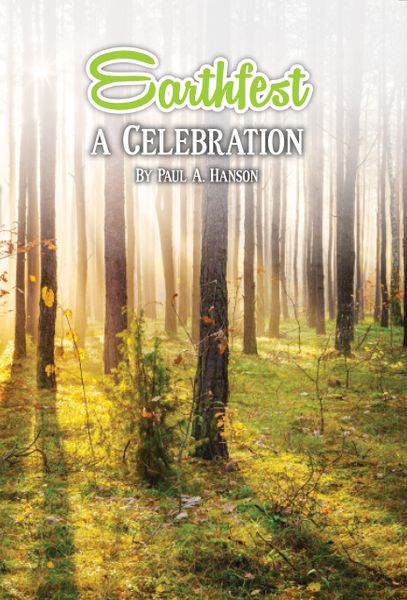 By Paul Hanson In 1990, Sheboygan resident, Kathy Alby, started Earthfest to make the public aware of the environment. It was to be a celebration of our environment and a venue to show us what we could do to make positive changes—small or large—to make our world a better place in which to live. Originally held at Lakeview Park, the festival moved to Vollrath Bowl in 1992 and finally to Fountain Park where it thrives today. This book is photographic memory or remembrance by Paul Hanson of some of the people and events that make Earthfest the special summer event that it is.
 -
 By Elmer Koppelmann A fascinating look at Sheboygan County's presidential races from the beginning of the county's involvement in national government (1848) through the 1988 election where George Bush defeated Michael Dukakis.
 -
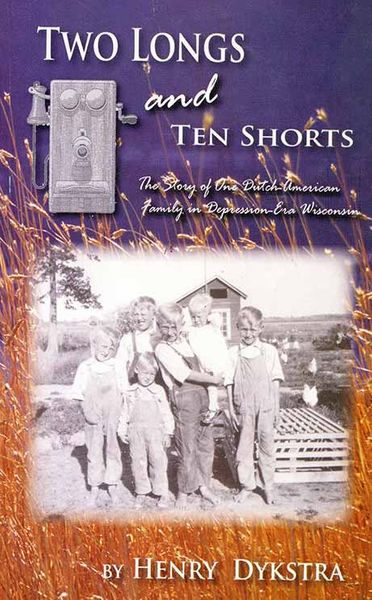 By Henry Dykstra This wonderful volume includes recollections of the author's childhood in Wood County, Wisconsin during the 1920s and 1930s. While the title sounds like a very long number from an old crank-style telephone, it actually refers to the two parents and ten children in the author's family. Henry Dykstra moved to Sheboygan County in 1941, and farmed there for over fifty years.
 -
Sale!
 By Fred Zitzer This book documents the Zitzer family's life in Schulz, Russia (also, known as Lugovaya Gryaznukha, Russia). It also details their immigrant trips to the United States. Modern day images of Schulz by Peter and Judy Kaland.
 -
Sale!
 Arved Ojamaa Ashby was born in Estonia on the Finnish Sea on August 8, 1922. Soviet armed forces brutally occupied his home country in 1940, and a carefree and idyllic life gave way to a time of uncertainty, fear, and death. He evaded the Russian draft in 1941 before he joined the military forces that liberated his home country. In 1943, he started his medical studies at the University of Tartu in Estonia. He fled to Finland to escape the German military draft, and fought the Russians as part of the Finnish army. Ashby moved with his young family to Wisconsin, where he opened his medical practice in 1960, at the Sheboygan Clinic. He retired in December 1989, having delivered thousands of babies.This book, a reprint of the two memoirs Capful of Wind and The Wind at my Back, tells Ashby’s traumatic but ultimately successful story – a coming of age story, and a story of emigration and survival. It is an immigrant story like no other.
 -
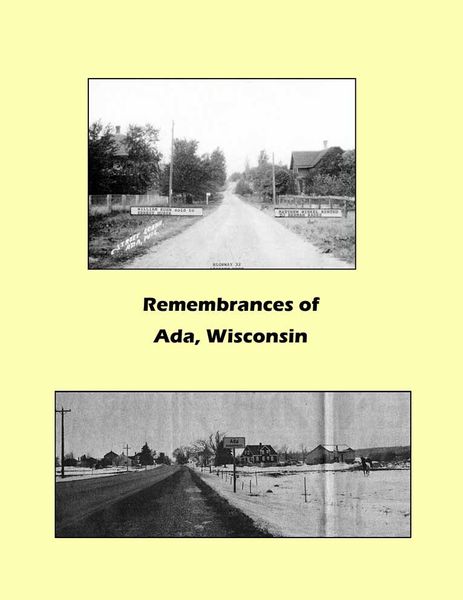
By Howards Grove Historical Research Group, Doris Henschel.
Ada was one of four small trading places (Howard, Franklin, Edwards and Ada) in the township in 1912. Ada consisted of a hotel, cheese factory, store and blacksmith. The population of town Herman in 1910 was 1,913, the majority of whom were Germans. This hamlet, located on the old Calumet-Sheboygan Plank Road twelve miles northwest of Sheboygan has a name of unknown origin. The post office was established on January 13, 1868, with Anton Goepfert acting as the first postmaster. Operations were discontinued on November 18, 1873. It was re-established on August 31, 1877, and once again discontinued permanently on April 30, 1909. William Maurer was the last postmaster. The book is full of history and wonderful memories.