-
Sale!
 Since 1961, Mayors of Sheboygan have been elected to four-year terms and considered full-time mayors. Prior to 1961, Mayors were considered part-time mayors because the men had other jobs, while also serving as mayor. Starting in 1853, the men who ran for mayor were nominated by local political parties which many times made things interesting. There were times when the man nominated for mayor did not want the job. In the 165 year history of Sheboygan, little has been done to honor the men who served as mayor. This book is an effort to pay tribute to them and accurately, yet simply, document their political tenure. The vignettes that follow are in alphabetical order for ease of organization. Filled with photos this includes biographies of all of the city of Sheboygan’s part-time and full-time mayors.
 -
 Originally platted as the village of Rochester, Sheboygan Falls took shape in the late 1830s and 1840s. Settled by Yankee entrepreneurs from the East, "Sheboygan at the Falls" was a strong settlement from the beginning, surviving even the financial panic of 1837. A city of Greek Revival and Cream City brick architecture, Sheboygan Falls boasts two districts listed on the National Historic Register
 -
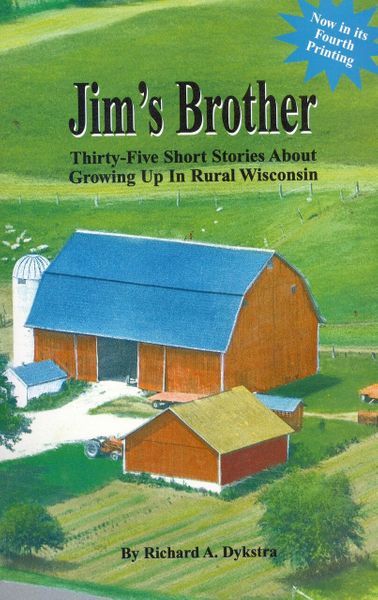 By Richard A. Dykstra Thirty-five heartwarming stories about growing up in rural Wisconsin during the 1950s and 1960s.
 -
Sale!
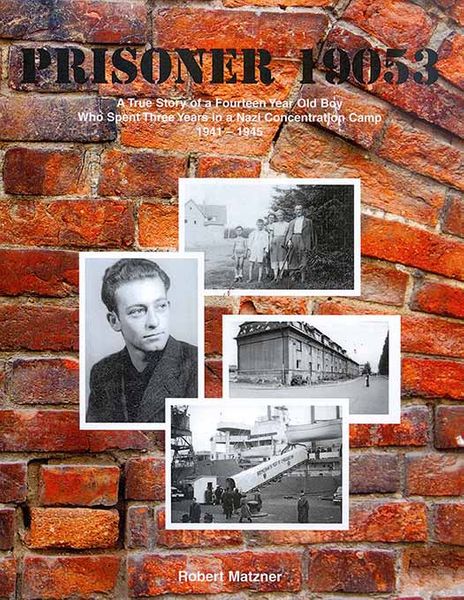 By Robert Matzner Sheboygan resident, Robert Matzner, had a very important story to tell. Friend, Larry Vogel, helped him to put pen to paper. The result is Prisoner 19053, the true story of Matzner’s three years in Nazi concentration camps. Matzner, a native of Poland, lost most of his family to the Nazi’s Final Solution. He somehow survived the horror and came to the United States and Sheboygan with his family in 1949. Robert and Larry have written a remarkable document, a story full of sadness and hope which will touch all readers. The introduction, written by Robert’s son, Murray, is a poignant tribute and a great beginning to Prisoner 19053.
 -
Sale!
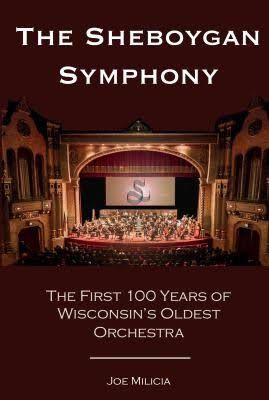 On a cold, cloudy evening, February 20, 1919, Zion Reformed Church in Sheboygan was reportedly "packed to the doors" to hear a concert. The highlight was to be a cantata performed by the Zion Choir, but the program listed them as "assisted" by a new entity: the Sheboygan Community Orchestra, led by John Schmidt, "who certainly needs no introduction," according to the anonymous review published the next day in the Sheboygan Press. In the months to follow, that body of players would be performing on their own, and by the time of their third concert they would be calling themselves the Sheboygan Symphony Orchestra. They are still the SSO, one hundred years after their founding in the fall of 1918: the oldest symphony orchestra still functioning in the state of Wisconsin. They have performed continuously, except for pauses during the Great Depression and in the midst of World War II; and though they were called the Sheboygan Civic (Symphony) Orchestra from 1936 to 1973, there has been a continuity in both personnel and musical vision, linking one generation to the next over a 100-year span.
 -
Sale!
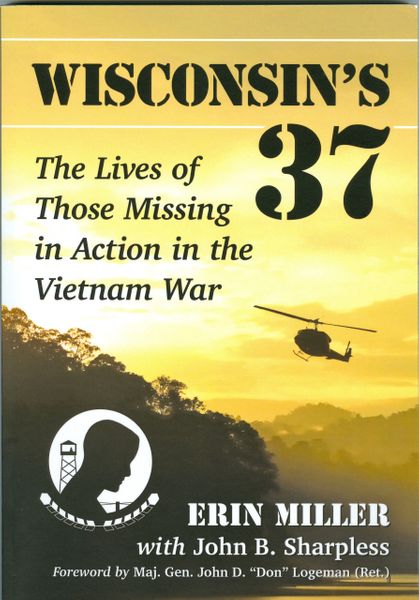 Wisconsin's 37, The Lives of Those Missing in Action in the Vietnam War. By Erin Miller with John B. Sharpless Foreword by Major General John D. "Don" Logeman (Ret.) The signing of the Paris Peace Accords in 1973 signified the end of the Vietnam War. American personnel returned home and the 591 Americans held captive in North Vietnam were released. Still, 2,646 individuals did not come home. Thirty-seven of those missing in action were from Wisconsin. Using the recollections of the soldiers' families, friends and fellow servicemen, the author tells the story of each man's life.
 -
 Sheboygan County Connection III is the continuing record of the lives of Sheboygan County residents and their adventures in history. Read about dozens of historic happenings experienced by residents from the death and autopsy of victims of Ed Gein to the mysteries of Sheboygan's Rancho de las Flores, refugees of the Great Chicago Fire of 1871, the architect for the construction of the first Mormon Temple at Nauvoo, Illinois and history of outhouses. These stories ran in the Sheboygan Press from November 2015 to October 2016.
 -
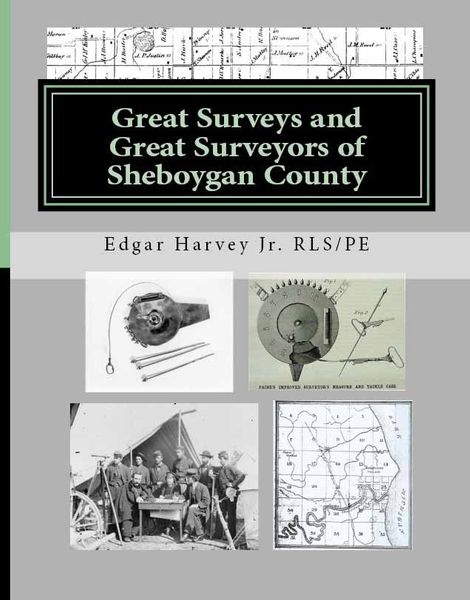
By Edgar Harvey Jr.
This book deals with many of Ed Harvey’s predecessors as Sheboygan County Surveyors. Harvey, after years of research, found that they included men of great character, and others whom we could term “shysters”. They included some pretty unremarkable individuals and others of great genius. Although they were humble surveyors while they worked in Sheboygan County, some of these men invented great things, or were otherwise involved in major events which changed the history of the entire nation or the world. One man worked on the Brooklyn Bridge project. Another worked on the Panama Canal. At least two of these men prepared maps which shaped the boundaries of nations. With all the same care, the same men prepared surveys which depicted the boundaries of comparatively small, private properties in Sheboygan County; An interesting and fresh way of analyzing Sheboygan County History.
-
Sale!
 By Jim Draeger and Mark Speltz The authors visit 60 Wisconsin gas stations that are still standing today and chronicles the history of these humble yet ubiquitous buildings. The book tells the larger story of the gas station's place in automobile culture and its evolution in tandem with American history, as well as the stories of the individuals influenced by the gas stations in their lives.
 -
Sale!
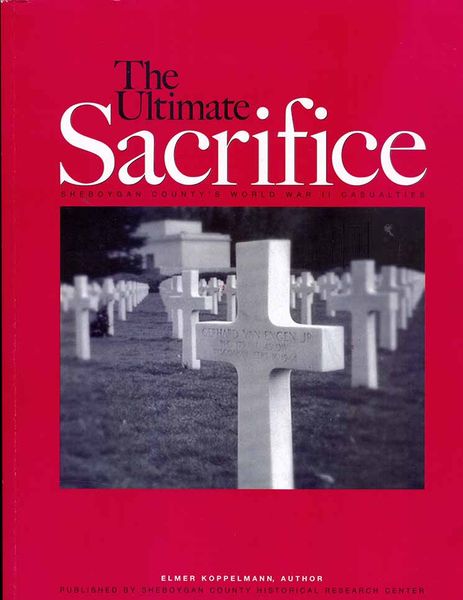 By Elmer Koppelmann The citizens of Sheboygan County have always gone above and beyond the call of duty in times of military need; the Second World War was no different. Some 3000 young men and women served during World War II on all fronts and in all capacities from this county alone. Recorded here, after eighteen months of searches and interviews, are vignettes of 234 soldiers- one young woman and 233 young men from the Sheboygan County area who lost their lives. Four others- Joseph J. Archbold, Elmer C. Prahl, Roland Thompson, and Douglas Thornberg are noted as making the ultimate sacrifice, but regrettably, no information was found other than their names.