Shop

  • By Howards Grove Historical Research Group, Doris Henschel.

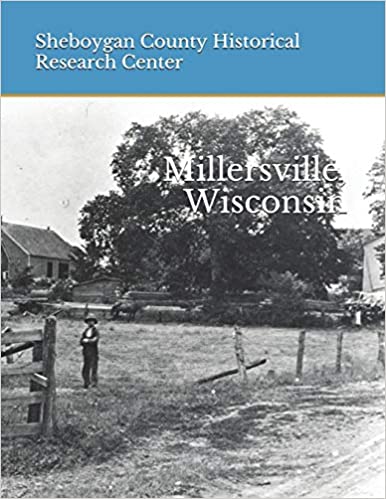
    Ada was one of four small trading places (Howard, Franklin, Edwards and Ada) in the township in 1912. Ada consisted of a hotel, cheese factory, store and blacksmith. The population of town Herman in 1910 was 1,913, the majority of whom were Germans. This hamlet, located on the old Calumet-Sheboygan Plank Road twelve miles northwest of Sheboygan has a name of unknown origin. The post office was established on January 13, 1868, with Anton Goepfert acting as the first postmaster. Operations were discontinued on November 18, 1873. It was re-established on August 31, 1877, and once again discontinued permanently on April 30, 1909. William Maurer was the last postmaster. The book is full of history and wonderful memories.

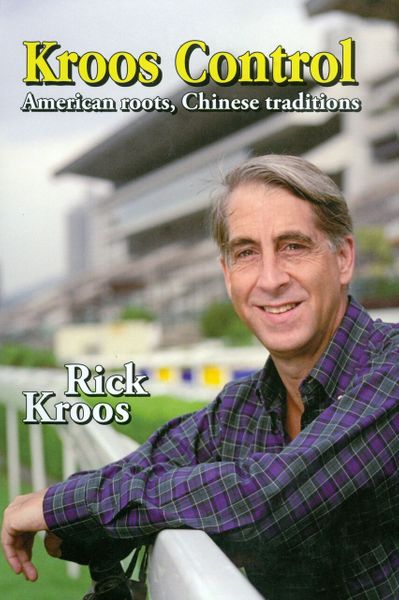
  • By Rick Kroos This autobiography by Rick Kroos takes you from his childhood home in the city of Sheboygan to Vietnam to Hong Kong, where he has lived most of his adult life. It is a wonderful and inspirational story from beginning to end.

  • Sale!

    Mayors of Sheboygan

    Original price was: $10.00.Current price is: $8.00.
    Since 1961, Mayors of Sheboygan have been elected to four-year terms and considered full-time mayors. Prior to 1961, Mayors were considered part-time mayors because the men had other jobs, while also serving as mayor. Starting in 1853, the men who ran for mayor were nominated by local political parties which many times made things interesting. There were times when the man nominated for mayor did not want the job. In the 165 year history of Sheboygan, little has been done to honor the men who served as mayor. This book is an effort to pay tribute to them and accurately, yet simply, document their political tenure. The vignettes that follow are in alphabetical order for ease of organization. Filled with photos this includes biographies of all of the city of Sheboygan’s part-time and full-time mayors.
  • By Henry Dykstra This wonderful volume includes recollections of the author's childhood in Wood County, Wisconsin during the 1920s and 1930s. While the title sounds like a very long number from an old crank-style telephone, it actually refers to the two parents and ten children in the author's family. Henry Dykstra moved to Sheboygan County in 1941, and farmed there for over fifty years.
  • By Richard A. Dykstra Thirty-five heartwarming stories about growing up in rural Wisconsin during the 1950s and 1960s.
  • Sale!

    Time in Hell, The Battle for Buna on the Island of New Guinea

    Original price was: $12.00.Current price is: $10.00.
    By Richard A. Stoelb This is the story of the men of Company F, 127th Infantry, 32nd Division, Wisconsin National Guard who left Sheboygan, Wisconsin for Federal Service on October 15, 1940. They would fight in the Battle for Buna on the island of New Guinea against the Japanese in World War II. Richard’s father, Roland Stoelb, was one of those soldiers who fought in the jungles of the Pacific to stop the Japanese during World War II. Roland along with dozens of boys from Sheboygan spent their Time in Hell, many of them making the ultimate sacrifice. Richard’s story personalizes the fight in the Pacific and honors the boys from Sheboygan.
  • Sale!

    Sheboygan Symphony, The First 100 Years

    Original price was: $22.00.Current price is: $15.00.
    On a cold, cloudy evening, February 20, 1919, Zion Reformed Church in Sheboygan was reportedly "packed to the doors" to hear a concert. The highlight was to be a cantata performed by the Zion Choir, but the program listed them as "assisted" by a new entity: the Sheboygan Community Orchestra, led by John Schmidt, "who certainly needs no introduction," according to the anonymous review published the next day in the Sheboygan Press. In the months to follow, that body of players would be performing on their own, and by the time of their third concert they would be calling themselves the Sheboygan Symphony Orchestra. They are still the SSO, one hundred years after their founding in the fall of 1918: the oldest symphony orchestra still functioning in the state of Wisconsin. They have performed continuously, except for pauses during the Great Depression and in the midst of World War II; and though they were called the Sheboygan Civic (Symphony) Orchestra from 1936 to 1973, there has been a continuity in both personnel and musical vision, linking one generation to the next over a 100-year span.
Go to Top